

Daily Journaling Prompts to Boost Your Mental Health
Private, mood-guided writing to help you reflect, vent, and heal — no accounts needed.
“You don’t have to see the whole staircase — just take the first step.”
— Martin Luther King Jr.
✨ New Year’s Resolution Prompts ✨
Click the button to get a new prompt!
Loading today’s prompt…
Why bother about journaling prompts? Imagine starting your day with a tool so simple yet so powerful it can lift brain fog, ease a tight chest, and turn a spiral of worry into a manageable list. This isn’t a new app or a prescription; it’s the practice of daily journaling. More than just diary-keeping, it’s a structured, private conversation with yourself that research, therapists, and countless individuals credit for fostering genuine mental well-being.
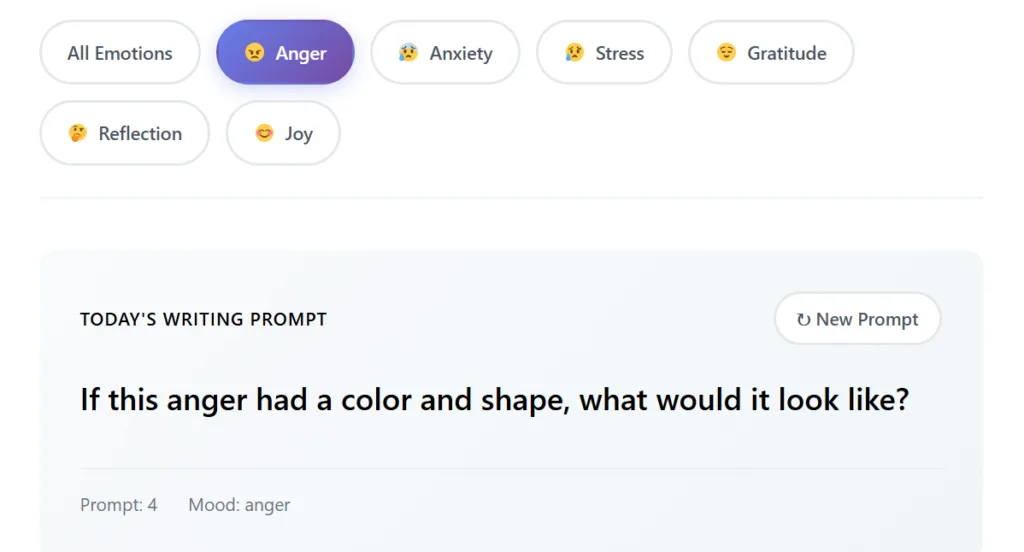
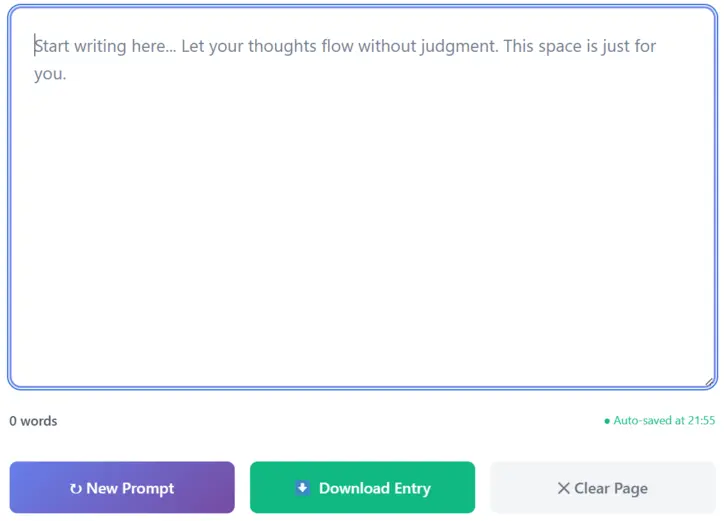
For those new to the practice, the blank page can feel intimidating. The secret? You don’t need profound thoughts to begin—you just need a starting point. That’s where daily journaling prompts come in. These guided questions act as gentle nudges, helping you explore your inner landscape, process complex emotions, and cultivate a healthier mindset.
What a consistent journaling practice can do for you?
The mental health benefits of expressive writing aren’t just anecdotal; they are supported by clinical psychology and neuroscience. Groundbreaking work by psychologist James W. Pennebaker established that writing about emotional experiences can lead to measurable improvements in both mental and physical health, from reduced stress to stronger immune function.
Clarifies Thoughts and Reduces Anxiety
When worries swirl in your mind, they can feel overwhelming. Writing them down externalizes these thoughts, making them tangible and often less frightening. You can begin to separate irrational fears from legitimate concerns, a technique often used in Cognitive Behavioral Therapy (CBT).
Processes and Regulates Emotions
Naming your feeling—whether it’s anger, sadness, or joy—is the first step to understanding and managing it. Journaling provides a safe container to explore the roots of these emotions without judgment, promoting emotional regulation.
Enhances Self-Awareness and Problem-Solving
Regularly checking in with yourself builds self-awareness. By documenting your reactions and patterns, you become better equipped to identify triggers and brainstorm constructive solutions, fostering resilience.
Tracks Progress and Cultivates Gratitude
A journal serves as a personal record of your growth. Looking back can reveal how you’ve overcome past challenges. Furthermore, prompts focused on gratitude can actively rewire your brain to notice the positive, combating negativity bias.
The Science-Backed Benefits of a Daily Writing Habit
A Week of Curated Daily Journaling PromptsTo help you begin, here is a 7-day sequence of prompts designed to guide you through different facets of mental wellness. Find a quiet moment, use your DailyVent Journal plugin for complete privacy, and let these questions lead the way.
Day 1 (Mindfulness & Presence)
What are three sensory details I notice right now? (e.g., the hum of my laptop, the weight of my feet on the floor, the taste of my coffee). How does noticing them change my sense of the present moment?
Day 2 (Emotional Inventory)
What is the dominant feeling I’m carrying today? If it had a color, texture, or location in my body, what would it be? Can I write about its origin without blaming myself or others?
Day 3 (Gratitude & Positivity)
What is one small, ordinary thing that went right today or that I can appreciate? It could be as simple as a warm shower, a completed task, or a moment of quiet.
Day 4 (Challenge & Perspective)
What’s one current challenge I’m facing? If a wise and compassionate friend were advising me, what might they say about this situation?
Day 5 (Values & Alignment)
What is one core value that’s important to me (e.g., honesty, creativity, family, growth)? Did I have an opportunity to live by that value today?
Day 6 (Letting Go)
Is there a thought, worry, or resentment I’m ready to release, even just a little? What would it feel like to set it down?
Day 7 (Reflection & Growth)
Comparing how I feel today to one week ago, what’s one subtle shift or insight I’ve noticed in myself?
How to Make Journaling a Ritual
Starting is one thing; maintaining the practice is another. Here’s how to make journaling a nourishing ritual, not a chore:
Prioritize Consistency Over Length
Five focused minutes every day is infinitely more powerful than one hour once a month. Set a manageable goal.
Create a Judgment-Free Zone
Your journal is for your eyes only. Practice self-compassion and write without worrying about grammar, spelling, or whether your thoughts are “right.”
Pair It with an Existing Habit
Anchor your journaling to an established part of your routine, like your morning coffee or evening wind-down. This is called habit stacking.
Use the Right Tools for Privacy
For truly free expression, you need to feel secure. A digital tool like DailyVent Journal—where all data stays locally in your browser—ensures your private thoughts remain private, removing a barrier to honest writing.
Important Considerations for Your JourneyWhile daily journaling with prompts is a powerful tool for self-care and mental health maintenance, it is not a substitute for professional care. If you are experiencing persistent symptoms of depression, anxiety, or trauma, seeking support from a licensed therapist, counselor, or psychologist is crucial. Organizations like the National Alliance on Mental Illness (NAMI) can provide valuable resources and guidance.
The goal of journaling prompts is not to achieve perfect happiness but to build emotional resilience, gain self-knowledge, and navigate life’s complexities with greater clarity and grace. By giving yourself these few minutes of daily reflection, you are investing in the foundational health of your mind. Start with one prompt, today, and see where your own words take you